
PU vs PIR Sandwich Panels: Best Choice for UAE Climate
PU vs. PIR Sandwich Panels – Which Is Better for UAE Climate?

When it comes to construction in the UAE, the right building materials can make all the difference. From scorching heat in Dubai to humid coastal conditions in Sharjah and Umm Al Quwain, choosing insulation wisely can impact energy savings, indoor comfort, and building safety. This is where PU (Polyurethane) and PIR (Polyisocyanurate) Sandwich Panels come into focus — two of the most popular insulated panel systems used across the UAE in warehouses, cold rooms, labor camps, temporary offices, factories, and commercial buildings.
Both PU and PIR sandwich panels are widely used in UAE projects because they solve three major problems at once: heat, energy efficiency, and fast installation. But when it comes to selecting the right type, many project owners, contractors, and consultants often ask:
Which is better for UAE weather — PU or PIR?
Let’s break it down.
Understanding Sandwich Panels in the UAE Construction Market
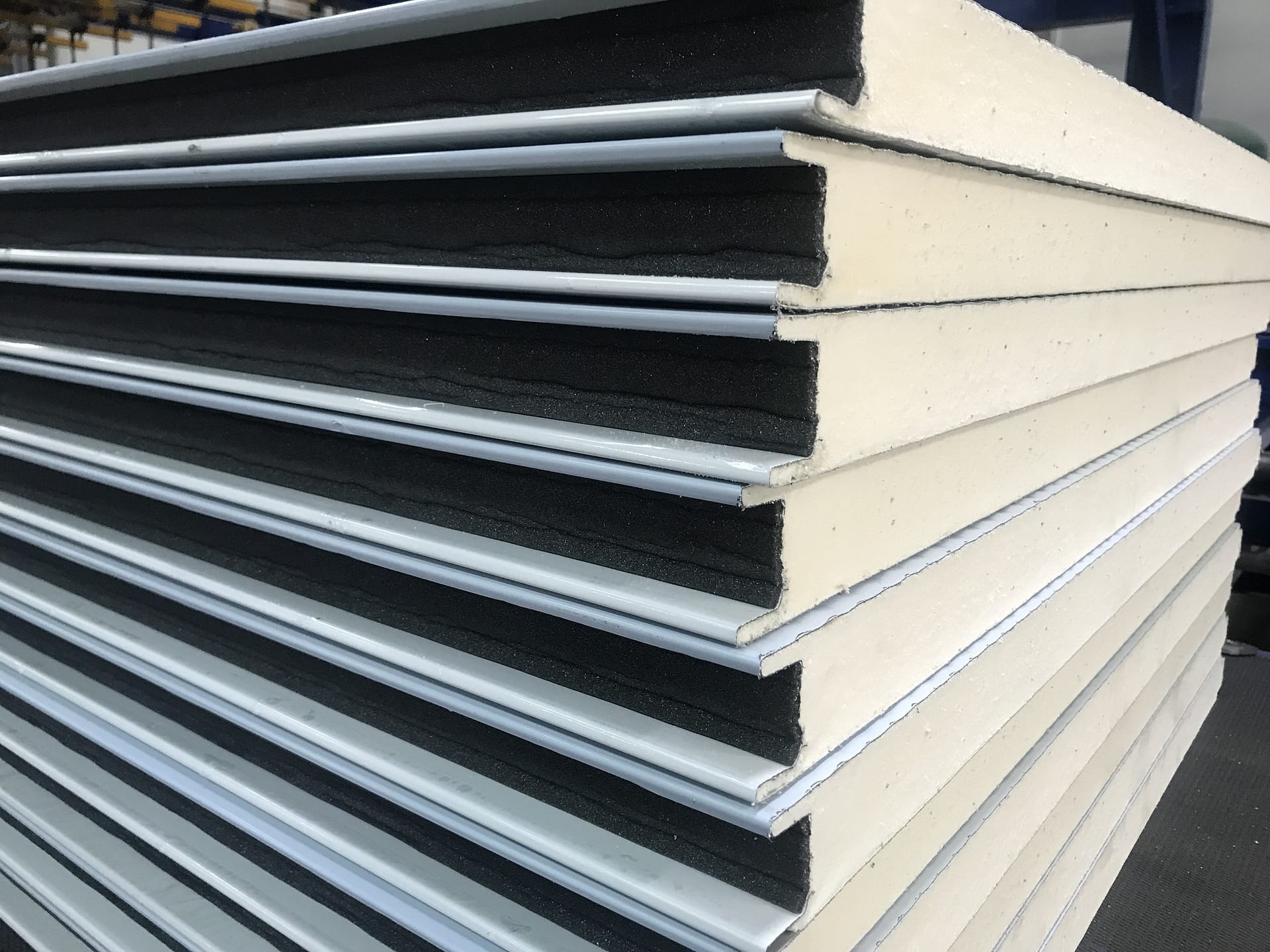
A sandwich panel consists of:
- An insulation core (PU or PIR)
- Metal sheets on both sides (usually galvanized steel or aluminum)
They are commonly used in UAE for:
- Industrial roofing and wall cladding
- Warehouse construction in Dubai Industrial City and JAFZA
- Cold storage facilities in Abu Dhabi
- Food processing units in Sharjah
- Labor accommodations in Ajman
- Modular buildings in Fujairah and RAK
- Prefab structures in construction zones across UAE
In a market where speed, insulation, and compliance matter, sandwich panels are the first choice
What Are PU Sandwich Panels?
PU (Polyurethane) panels have been used in the UAE for decades. They are:
- Lightweight
- Affordable
- Easy to install
- Great insulators against UAE heat
They are very common in:
- General warehouses
- Low-budget commercial projects
- Site offices in Dubai and Abu Dhabi
- Portable cabins used by contractors
What Are PIR Sandwich Panels?
PIR sandwich panels (Polyisocyanurate) is an upgraded, fire-resistant version of PU foam. While PU is great at insulation, PIR was developed to improve fire safety — a rising requirement across the UAE.
PIR panels are preferred by:
- Engineers
- Civil Defense inspectors
- Safety consultants in UAE projects
Especially in:
- Dubai South warehouses
- Sharjah free zone factories
- Food processing and pharma units
- Data centers in Abu Dhabi
Thermal Insulation: A Critical Need in the UAE
With summer temperatures often crossing 48°C, thermal insulation is non-negotiable.
Here’s how they compare:
- PU Thermal Value: 0.022 – 0.028 W/mK
- PIR Thermal Value: 0.020 – 0.026 W/mK
That makes PIR slightly superior, helping reduce AC usage — which matters a lot in the UAE where cooling costs dominate electricity bills.
Winner in UAE climate: PIR (by a small gap)
Fire Rating – Key Issue for UAE Construction Approval
Since the UAE follows strict fire codes — especially in Dubai and Abu Dhabi — fire rating has become one of the most important selection criteria.
PU Panels:
- Good insulation but poor fire behavior
- Can ignite under high temperature
- Not always approved for commercial sites
PIR Panels:
- Fire-resistant
- Self-extinguishing
- Does not drip molten foam
- Meets Dubai Civil Defense and FM Global approvals
In UAE warehouses and industrial projects, PIR has now become the recommended and often required option.
Clear winner for UAE compliance: PIR
Cost Differences in UAE Projects
For budget-conscious construction — especially in Ajman, UAQ, and industrial Sajja — cost matters.
- PU Panels: Cheaper
- PIR Panels: Around 10–20% more expensive
Many UAE project owners still choose PU because of lower upfront cost — especially for temporary or low-rise buildings.
Winner for UAE budget builds: PU
Durability Across UAE Weather Conditions
Due to extreme heat and intense sunlight in the UAE, durability is important.
PU:
- Decent life
- But can degrade faster in extreme heat
PIR:
- Higher chemical stability
- Longer lifespan in UAE conditions
Winner for UAE durability: PIR
PU vs PIR in UAE — Side-by-Side Comparison
| Feature | PU Panels | PIR Panels |
|---|---|---|
| Use in UAE | Very Common | Rapidly Increasing |
| Insulation | Excellent | Slightly Better |
| Fire Resistance | Low | Very High |
| UAE Civil Defense Approval | Sometimes | Often Required |
| Cost in UAE | Lower | Higher |
| UAE Warehouse Usage | High | Highest in new builds |
| Durability in Heat | Good | Excellent |
| UAE ROI (Long-term) | Medium | High |
Where Each Type Is Used Across the UAE
PU Sandwich Panels — Mostly Used In:
- Labor camps in Dubai and Ajman
- Temporary site offices in Abu Dhabi
- Mango ripening rooms in Umm Al Quwain
- Prefab buildings in Sharjah Industrial Area
- Agriculture storage units in Al Ain
PIR Sandwich Panels — Mostly Used In:
- Logistics warehouses in Dubai South and JAFZA
- Food factories in Sharjah and Abu Dhabi
- Cold storage units in RAK and Dubai
- MEP and mechanical rooms across the UAE
- Civil Defense-approved factory projects
So, Which Is Better for UAE Climate?
If budget is your main concern → PU works well, especially for quick builds.
If fire safety, approval, or longevity matter → PIR is the stronger choice.
In today’s UAE construction standards — especially in Dubai, Abu Dhabi, and Sharjah — PIR is becoming the recommended industry standard.
Final Words
Whether you’re building a cold room in Dubai, a warehouse in Sharjah, or a prefab office in Abu Dhabi — sandwich panels are a smart choice in the UAE.
PU offers cost savings in the short term.
PIR offers fire safety, long-term durability, and compliance.
In a country like the UAE — where heat is high, energy use is intense, and safety rules are strict — PIR sandwich panels are increasingly the better long-term investment
FAQ Section
Q1: Are PIR panels required by UAE Civil Defense?
Yes, in many commercial and industrial projects, especially in Dubai and Abu Dhabi, PIR is required due to its high fire resistance.
Q2: Which panel offers better thermal insulation for UAE heat?
PIR offers slightly better insulation than PU panels, making it more energy efficient in UAE climate conditions.
Q3: Is PU still used in UAE construction?
Yes, PU is widely used in budget projects, temporary structures, and non-fire-rated buildings across Dubai, Sharjah, Ajman, and Umm Al Quwain.
Q4: Are PU panels fireproof?
No, PU panels are not naturally fire-resistant and can ignite under high heat unless treated with additives.
Q5: Does PIR cost more than PU in UAE?
Yes, PIR panels typically cost 10–20% more but offer better fire safety, stability, and long-term performance.