Staircases for Multi-Story Buildings : Types, Materials & Safety Guide
Staircases for Multi-Story Buildings: Types, Materials, Safety, and Modern Applications

In any multi-storey building, staircases are far more than just a means of moving between floors. They are a vital structural element that ensures safety, accessibility, and smooth circulation for occupants. Whether it is a residential apartment, commercial complex, warehouse, or industrial facility, a well-designed staircase plays a key role in functionality, compliance, and long-term durability. In today’s construction industry, especially in fast-growing regions like the UAE, staircases are designed to balance strength, safety, and aesthetics.
Importance of Staircases in Structures
Staircases serve as the primary or secondary access between floors and are critical during emergencies such as fire evacuations. Even in buildings equipped with elevators, staircases remain mandatory under building regulations. A properly planned staircase improves traffic flow, reduces accident risks, and ensures compliance with local authority and civil defense standards. In industrial and commercial buildings, staircases must also support higher loads and frequent use without compromising stability.
Common Types of Multi-Story Buildings
Straight Staircase
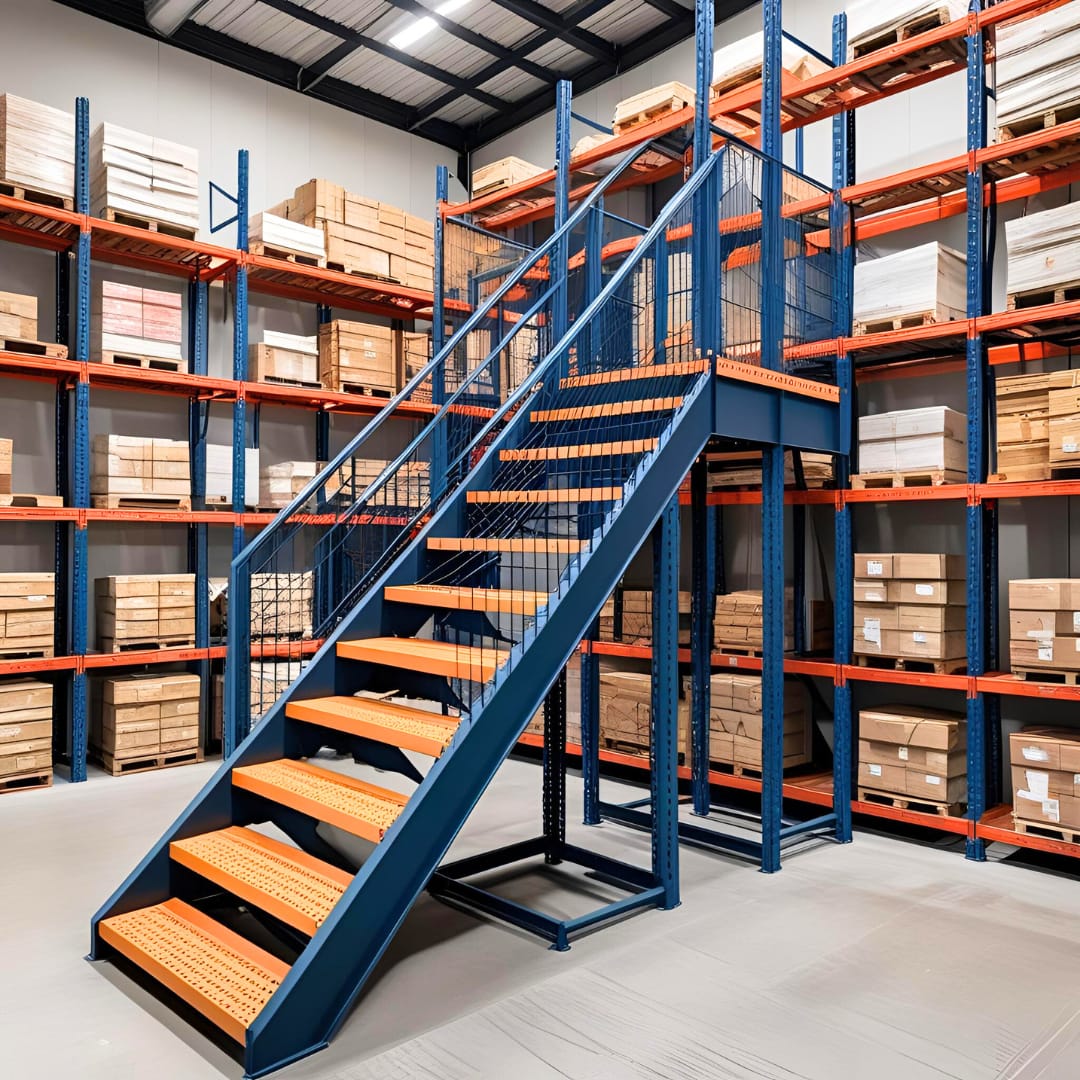
A straight staircase is the simplest and most cost-effective design. It consists of a single continuous flight without turns. This type is easy to design, install, and maintain, making it popular in warehouses, factories, and low-rise buildings where space is not a major constraint.
L-Shaped Staircase
L-shaped staircases include a landing with a 90-degree turn. This design offers better safety compared to straight stairs, as the landing breaks the fall path. It is commonly used in residential and commercial buildings where moderate space efficiency and comfort are required.
U-Shaped Staircase
U-shaped staircase consist of two parallel flights connected by a landing. They are ideal for multi-story buildings with high foot traffic, such as offices, malls, and hospitals. This design allows smooth movement and reduces fatigue while climbing multiple floors.
Dog-Legged Staircase
A dog-legged staircase is similar to a U-shaped design but does not have an open well between the flights. It is compact, strong, and widely used in apartment buildings and commercial structures where space optimization is important.
Spiral Staircase
Spiral staircase revolve around a central column and occupy minimal floor area. While they are visually appealing and space-saving, they are usually used as secondary staircases, rooftop access, or emergency exits due to limited width and load capacity.
Open Well Staircase
Open well staircase feature an open space between flights, allowing better ventilation and natural light. They are often used in premium commercial buildings, hotels, and public spaces where design aesthetics matter.
Materials Used in Stairs
Concrete Staircase
Concrete is one of the most widely used materials for multi-storey staircase. It offers excellent fire resistance, strength, and durability. Concrete staircases are suitable for high-rise buildings and can be finished with tiles, stone, or anti-skid coatings.
Steel Staircase
Steel staircase are popular in industrial, warehouse, and commercial applications. They are strong, lightweight, and faster to install compared to concrete. Steel staircases can be prefabricated, making them ideal for projects with tight timelines.
MS and GI Staircase
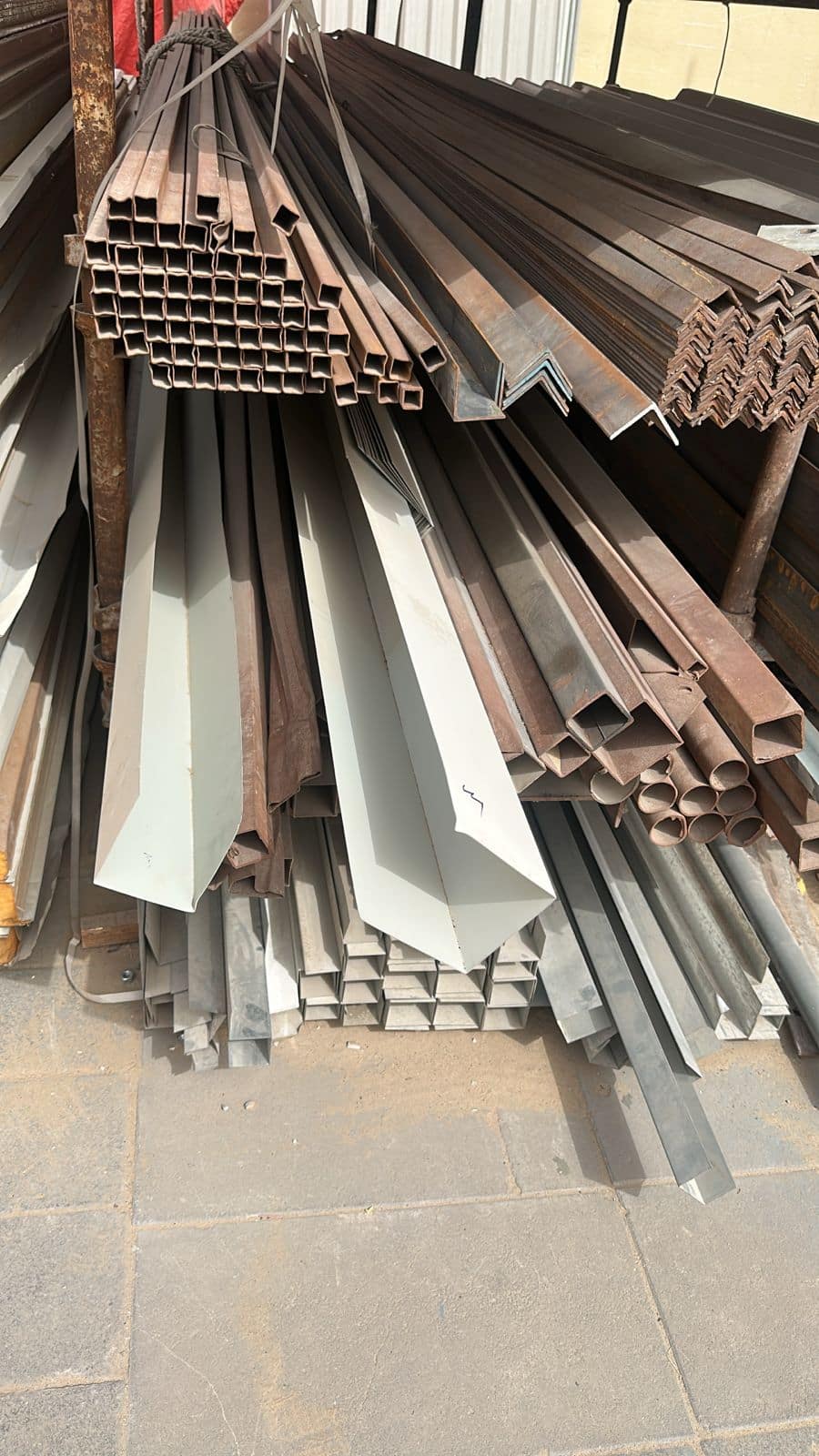
Mild steel (MS) and galvanized iron (GI) staircases are cost-effective and corrosion-resistant, especially important in the UAE’s climate. These staircases are commonly used in factories, labor accommodations, and service areas.
Wooden Staircase
Wooden staircase are mainly used in residential and luxury interiors. While they offer an elegant appearance, they require regular maintenance and are not typically recommended for heavy-duty or high-traffic multi-storey buildings.
Safety and Design Considerations
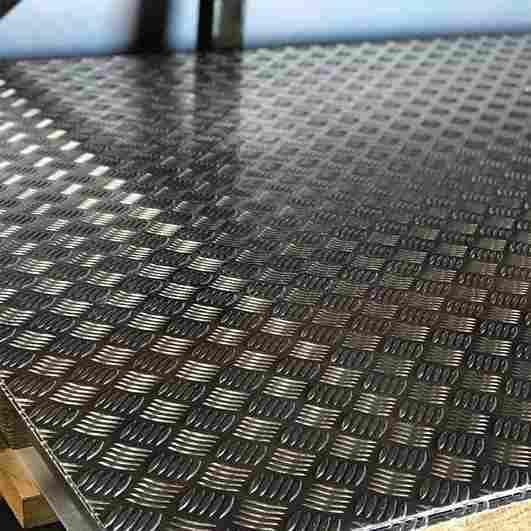
Safety is the most critical factor in staircase design. Uniform riser heights and tread widths help prevent trips and falls. Anti-skid surfaces are essential, particularly in industrial and commercial environments. Handrails and guardrails should be installed at standard heights and designed to support continuous use. Adequate staircase width is required to allow smooth evacuation during emergencies. Fire-rated materials and compliance with local building codes and civil defense regulations are mandatory in multi-storey structures.
Proper lighting and ventilation also enhance safety and comfort. In modern designs, staircases are often integrated with natural light sources or emergency lighting systems to ensure visibility during power failures.
Applications of Multi-Story Staircase
Multi-story staircase are used across a wide range of buildings, including residential apartments, office towers, warehouses, shopping malls, schools, hospitals, and industrial facilities. Each application requires a tailored approach based on load requirements, space availability, usage frequency, and safety standards.
Conclusion
Staircase for multi-story buildings are a fundamental part of construction that directly impacts safety, efficiency, and usability. Choosing the right type, material, and design ensures long-term performance and compliance with regulations. Whether it is a robust concrete staircase for a high-rise building or a steel staircase for an industrial warehouse, careful planning and quality materials make all the difference. Investing in well-designed staircases not only enhances building functionality but also protects lives and adds lasting value to the structure.