
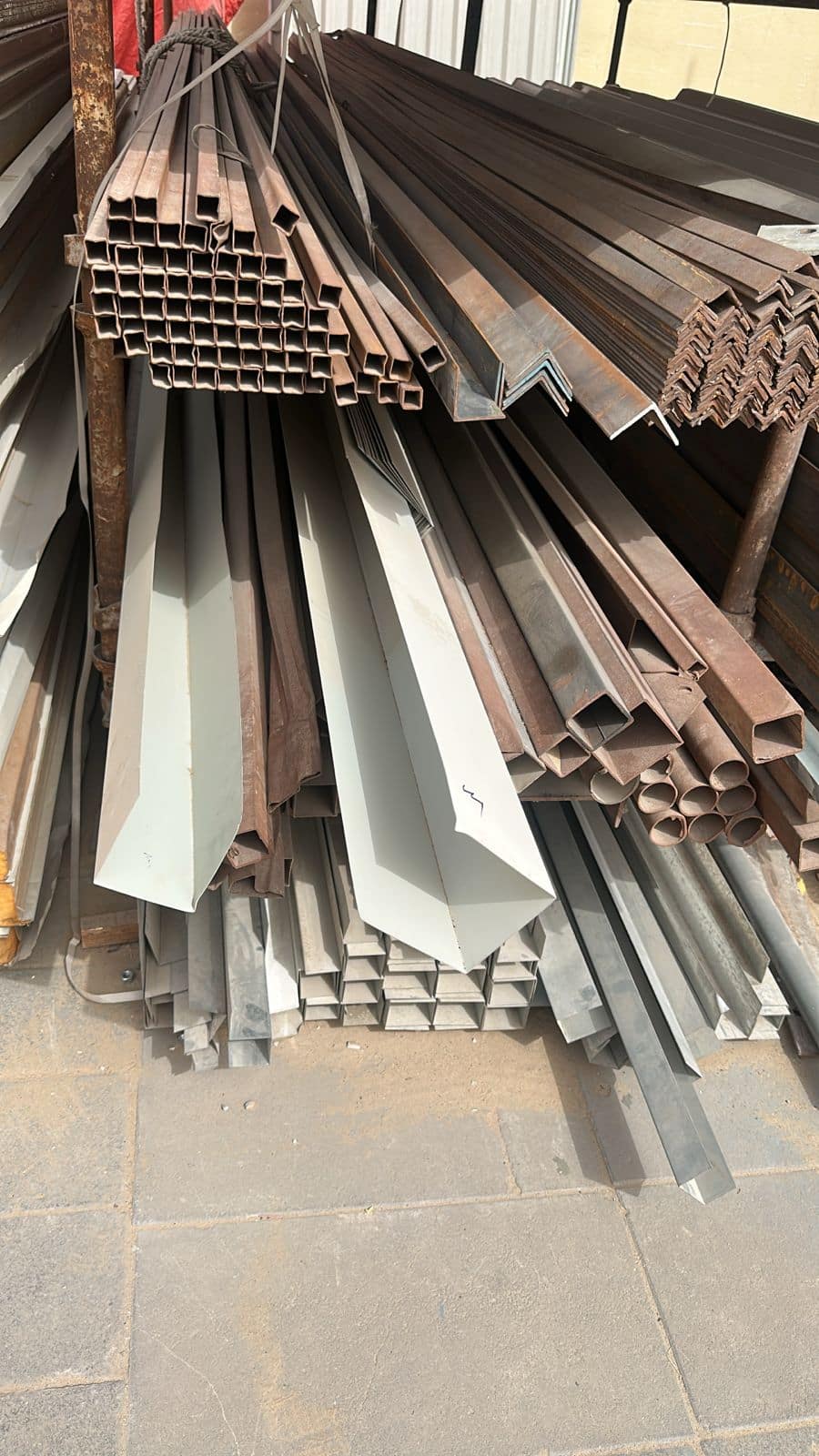
Best Steel Tubes and Angles in UAE : Structural & Fabrication Materials
Steel Tubes and Angles: Essential Structural Materials for Modern Construction

Steel tubes and angles are among the most widely used materials in construction, fabrication, and industrial projects. Their strength, versatility, and cost-effectiveness make them essential components in buildings, warehouses, factories, and infrastructure works. From structural frameworks to support systems and custom fabrication, steel tubes and angles play a key role in ensuring durability and long-term performance. Choosing the right type and grade of steel is crucial for safety, efficiency, and overall project success.
What Are Steel Tubes?
Steel tubes are hollow structural sections manufactured in round, square, or rectangular shapes. They are commonly produced using mild steel or structural-grade steel and are available in various thicknesses and sizes. The hollow design of steel tubes provides excellent strength-to-weight ratio, making them ideal for applications where both durability and reduced material weight are required.
Steel tubes are used in a wide range of projects, including building frames, scaffolding, furniture manufacturing, fencing, handrails, and industrial equipment. Their uniform shape allows for easy cutting, welding, and fabrication.
What Are Steel Angles?
Steel angles are L-shaped structural sections with two legs joined at a right angle. They are available in equal angles, where both legs are the same size, and unequal angles, where one leg is longer than the other. Steel angles are known for their excellent load-bearing capacity and are commonly used for structural reinforcement and framing.
Angles are widely used in construction frameworks, bracing systems, racks, towers, platforms, and machinery supports. Their shape provides strong resistance to bending and twisting forces.
Key Benefits of Steel Tubes and Angles
High Strength and Durability:
Steel tubes and angles are designed to withstand heavy loads, pressure, and environmental stress. When properly manufactured and treated, they offer long-lasting performance even in demanding industrial conditions.
Versatility in Applications:
These materials can be used in residential, commercial, and industrial projects. Their adaptability makes them suitable for both permanent structures and temporary installations.
Ease of Fabrication:
Steel tubes and angles are easy to cut, weld, drill, and shape. This flexibility allows fabricators to create custom designs and structures efficiently.
Cost-Effective Solution:
Compared to other structural materials, steel tubes and angles provide excellent value due to their strength, availability, and low maintenance requirements.
Clean and Professional Finish:
With smooth surfaces and precise dimensions, steel tubes and angles offer a neat appearance suitable for exposed structures and architectural applications.
Common Applications of Steel Tubes
Steel tubes are extensively used in structural frames, mezzanine floors, warehouse racking systems, and roofing supports. In industrial settings, they are used for pipelines, conveyors, machine frames, and safety barriers. Square and rectangular tubes are particularly popular in fabrication works due to their stability and ease of alignment.
In architectural projects, steel tubes are used for railings, canopies, pergolas, and modern design elements.
Common Applications of Steel Angles
Steel angles are commonly used for bracing, edging, and framing. They provide strong support in steel structures, transmission towers, racks, shelving systems, and platforms. Angles are also used to reinforce corners and edges, improving overall structural stability.
In fabrication workshops, steel angles are widely used for making frames, supports, and customized metal products.
Manufacturing and Quality Standards
Steel tubes and angles are manufactured using hot-rolled or cold-formed processes. Quality standards ensure consistency in dimensions, thickness, and mechanical properties. Protective coatings such as galvanization or primer coatings help prevent corrosion and extend the lifespan of steel products.
Selecting materials that meet recognized standards ensures safety, reliability, and compliance with project requirements.
Choosing the Right Steel Tubes and Angles
Choosing the correct size, thickness, and grade depends on the application, load requirements, and environmental conditions. Structural applications require higher-grade steel with verified load capacity, while light fabrication may use thinner sections.
Consulting experienced suppliers and engineers helps ensure the right material selection, minimizing waste and improving performance.
Handling, Storage, and Maintenance
Proper handling and storage of steel tubes and angles prevent damage and corrosion. Materials should be stored in dry, covered areas and handled carefully to avoid bending or surface damage. Periodic inspection and surface treatment help maintain long-term durability.
Conclusion
Steel tubes and angles are fundamental building blocks of modern construction and industrial fabrication. Their strength, versatility, and cost efficiency make them suitable for a wide range of applications, from structural frameworks to customized metal works. By selecting high-quality steel tubes and angles and using them correctly, builders and fabricators can achieve strong, reliable, and long-lasting structures that meet both functional and safety requirements.
