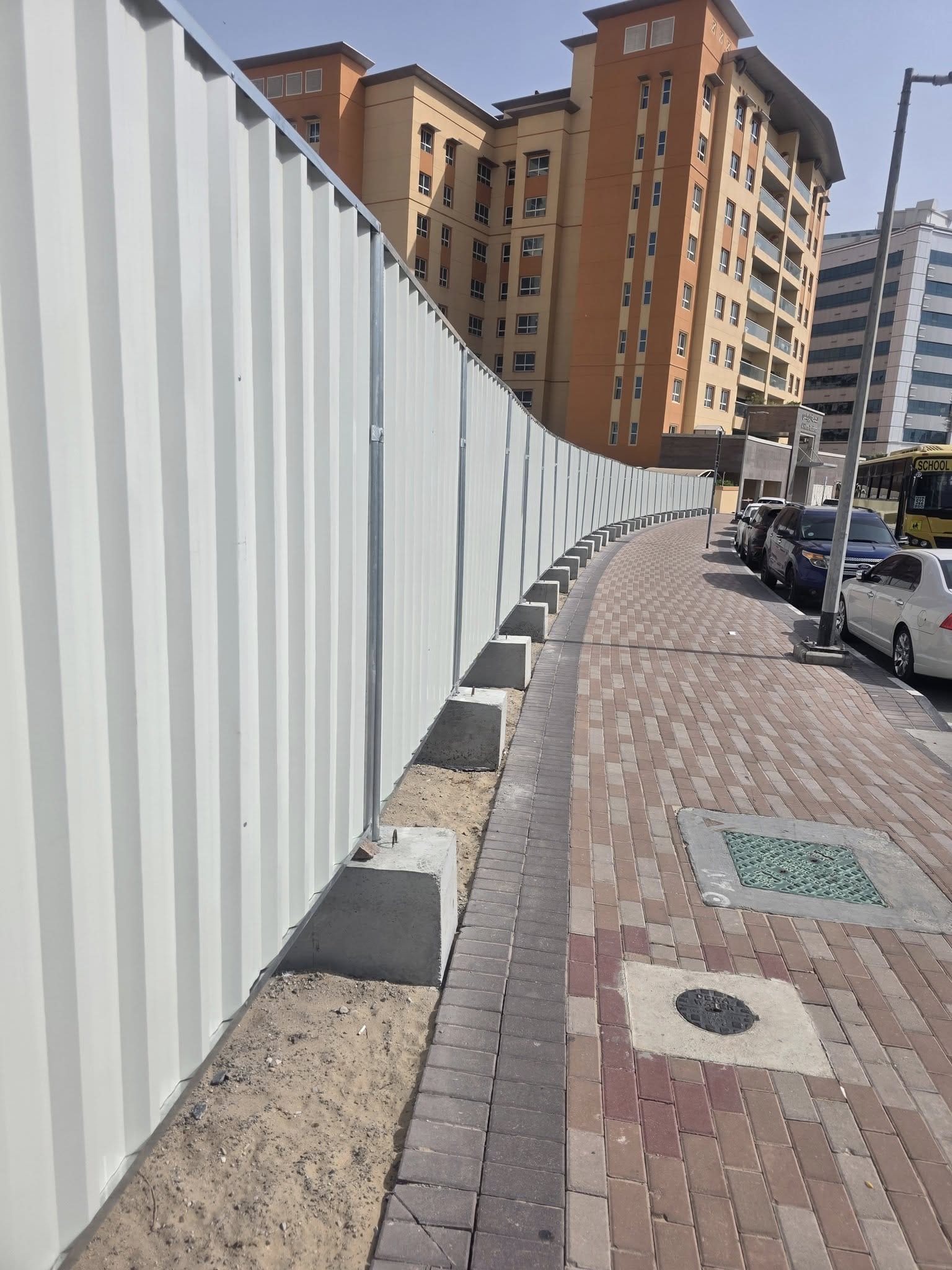
How Temporary Fencing Controls: Construction Site Access in the UAE
How Temporary Fencing Helps Control Construction Site Access

Construction sites are busy and constantly changing environments. From heavy machinery and expensive materials to workers and visitors, there is always a lot happening on-site. With this activity comes risk—risk of accidents, theft, unauthorized entry, and disruption. For contractors and developers in the UAE, one of the most effective solutions to manage these risks is temporary fencing.
Temporary fencing acts as a protective shield around construction projects. It not only ensures safety but also helps in controlling who can access the site. Let’s take a closer look at why temporary fencing is a must-have for modern construction projects and how it helps in maintaining secure and well-managed site access.
1. Prevents Unauthorized Access
One of the most important roles of temporary fencing is to stop unauthorized individuals from entering the site. Construction zones often attract curious passersby or trespassers, which can lead to accidents or even theft.
A properly installed fence serves as a visible and physical barrier. It sends a clear message that entry is restricted and access is controlled. For example, in cities like Dubai and Sharjah, where construction often happens near public roads and busy neighborhoods, fencing is essential to keep outsiders away from danger zones.
2. Ensures Safety for Workers and the Public
Construction sites are filled with potential hazards—deep trenches, sharp tools, scaffolding, and heavy vehicles. Without proper fencing, these dangers could put both workers and the general public at risk.
Temporary fencing helps by creating a safe separation between the work area and public spaces. It reduces interruptions for workers and prevents pedestrians, children, or vehicles from accidentally entering the site. In the UAE, where projects are often surrounded by residential or commercial areas, fencing is not only a safety measure but also a social responsibility.
3. Creates Controlled Access Point
With fencing in place, site managers can set up designated gates for entry and exit. This ensures that vehicles, workers, and visitors pass through specific checkpoints instead of entering from all directions.
The benefits include:
- Easier monitoring of who comes in and out.
- Improved record-keeping for safety compliance.
- Smoother movement of materials and machinery.
Controlled access points also allow security staff to check IDs, issue passes, or inspect deliveries before they enter, ensuring better organization on-site.
4. Reduces Theft and Vandalism
Construction materials such as steel, wood, and electrical equipment are expensive and highly valuable. Unfortunately, they are also attractive targets for theft. Even small items going missing can lead to delays and extra costs.
Temporary fencing acts as a strong deterrent. A fenced site is harder to access without permission, which discourages potential thieves or vandals. When combined with security cameras or guards, fencing becomes a vital part of an overall security plan that protects both assets and progress.
5. Meets Legal and Regulatory Requirements
In the UAE, municipalities and government authorities often require contractors to install fencing around active construction sites. This ensures compliance with safety standards and minimizes risks to the public.
By investing in quality fencing, contractors avoid fines, penalties, or project delays caused by non-compliance. Moreover, it reflects a professional approach and commitment to following regulations—something clients and stakeholders always appreciate.
6. Offers Flexibility and Easy Installation
Temporary fencing is designed to be flexible and reusable. Unlike permanent walls, it can be quickly installed, moved, or removed depending on project requirements.
This adaptability makes it ideal for:
- Short-term construction or renovation projects.
- Sites that expand or change layouts over time.
- Emergency situations where an area needs to be closed off quickly.
For contractors handling multiple projects in Sharjah, Dubai, or Abu Dhabi, the ability to reuse fencing panels across different sites saves both time and money.
7. Enhances Professional Image
A secure and well-fenced construction site not only prevents risks but also creates a professional impression. Passersby, clients, and investors see a site that is organized, safe, and under control.
This attention to detail can strengthen trust and credibility, especially in competitive markets like the UAE, where reputation matters in winning future contracts.
Conclusion
Temporary fencing is more than just a boundary—it is an essential tool for access control, safety, theft prevention, and compliance. By preventing unauthorized entry, protecting workers and the public, and creating controlled access points, fencing ensures that construction projects run smoothly and without unnecessary risks.
In the UAE, where construction continues to play a major role in economic growth, investing in reliable temporary fencing is not optional—it’s a necessity. Whether you are managing a small renovation or a large-scale development, secure fencing is the simplest and most effective way to control access and safeguard your project.