Temporary construction Fencing vs Permanent Site Fencing: Abu Dhabi & Ajman Rules
Construction Site Fencing in Abu Dhabi & Ajman: A Practical Guide to Temporary and Permanent Solutions

If you’re managing a construction Fencing project in Abu Dhabi or Ajman, fencing probably isn’t the first thing on your mind — but it should be near the top of the list. It’s one of the few site elements that’s mandatory, inspected, and directly tied to your ability to keep working without fines or shutdowns. Get it wrong, and you’re looking at warnings, forced rework, or a halted site. Get it right, and it quietly does its job for the entire duration of the build.
This guide walks through what site fencing actually needs to do, the rules municipalities enforce in Abu Dhabi and Ajman, the materials contractors typically choose between, and how to think about temporary versus permanent setups depending on your project.
Why Fencing Isn’t Optional on UAE Construction Sites
A construction Fencing site is full of hazards that have nothing to do with the people working inside it — falling debris, exposed trenches, heavy machinery, loose materials, and unfinished structures. The fence is what stands between all of that and the public walking, driving, or living nearby.
Abu Dhabi City Municipality has been explicit about this. Following inspection campaigns across the emirate, officials have stressed that temporary fences need a license issued by the municipality, along with periodic maintenance, and have urged workers and contractors to treat fencing as both a safety and security obligation — protecting workers and residents alike. The general appearance of the fence matters too, not just whether one exists.
This isn’t a theoretical concern. In past inspection sweeps across islands and communities including Reem Island, Al Raha Beach, Yas Island, and Khalifa City, municipal authorities issued dozens of violations and warnings to contractors who failed to meet health and safety requirements. Among the issues found, fencing simply hadn’t been set up at some sites, while others had illegally stored materials or unmaintained firefighting equipment. Fencing failures don’t happen in isolation — they tend to show up alongside other compliance gaps, which is exactly why inspectors check for it first.
What Abu Dhabi Municipality Actually Requires
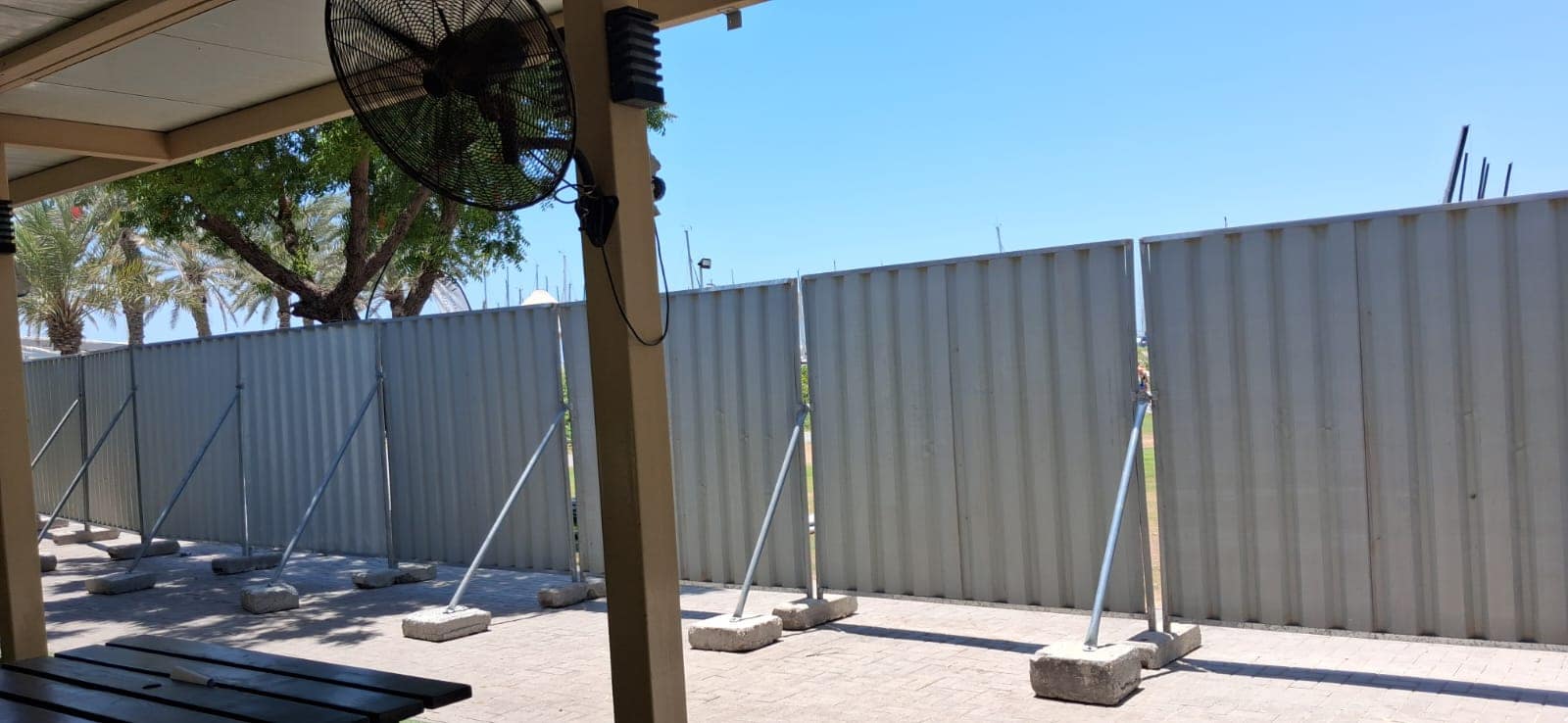
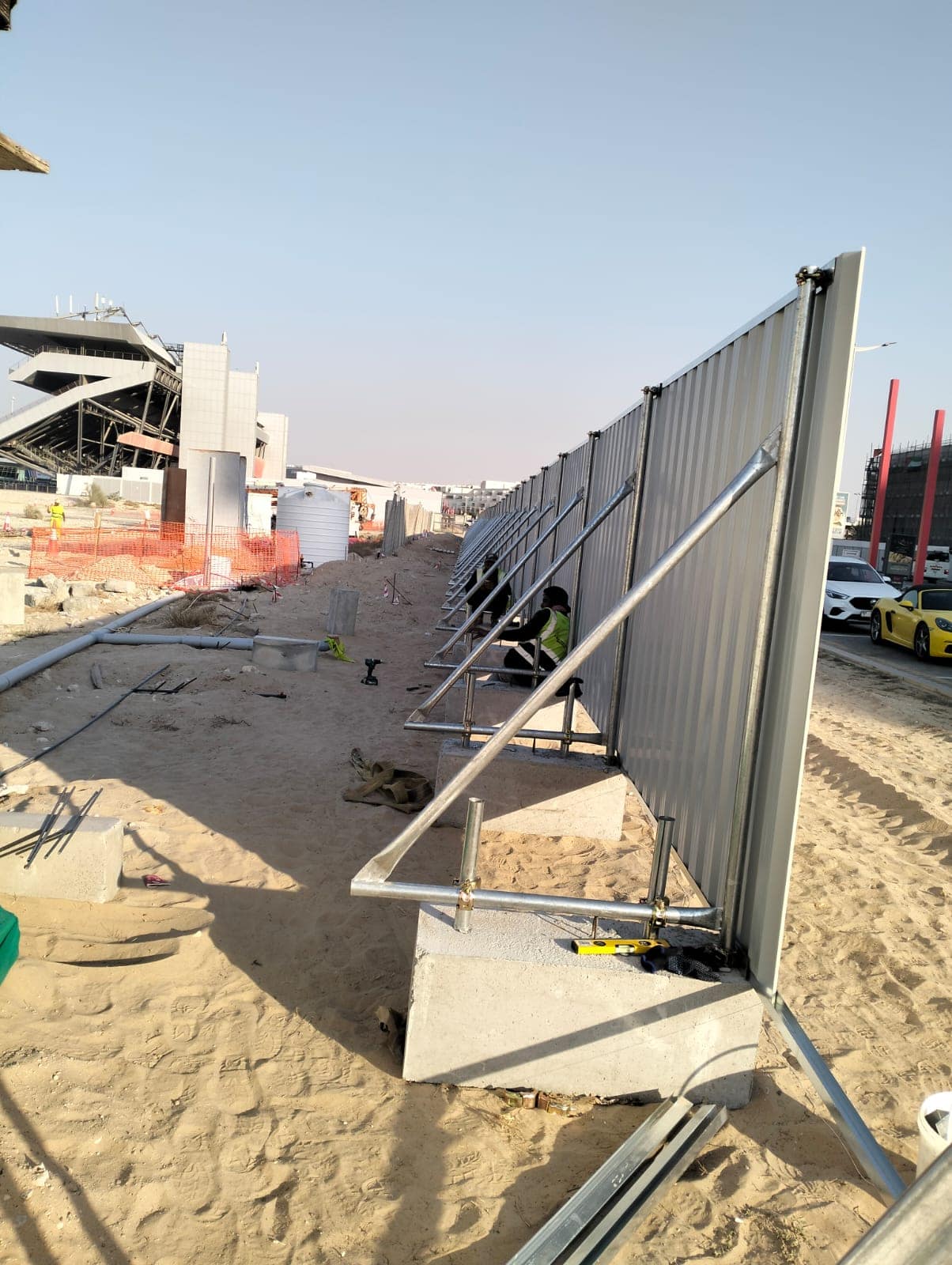
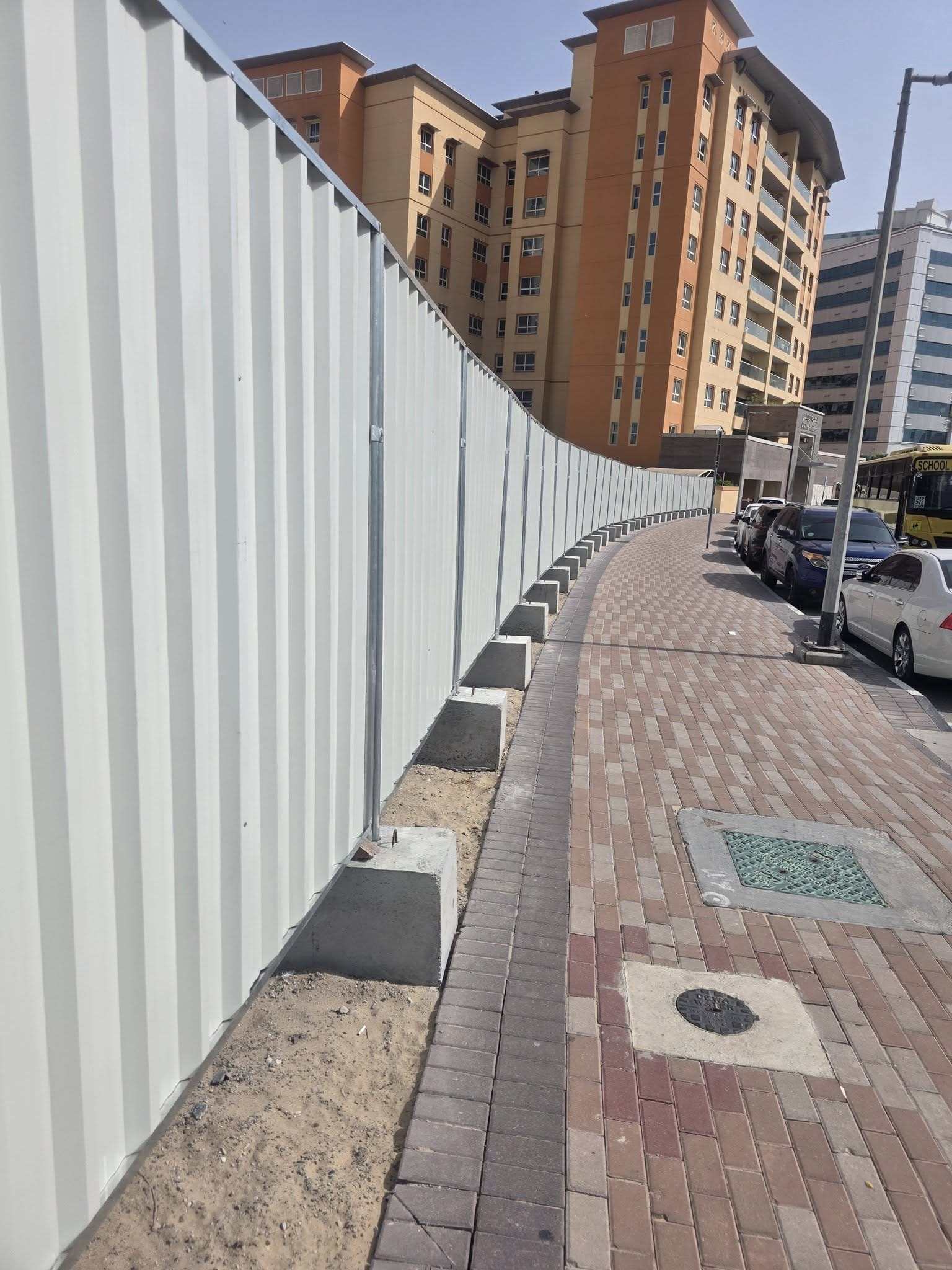
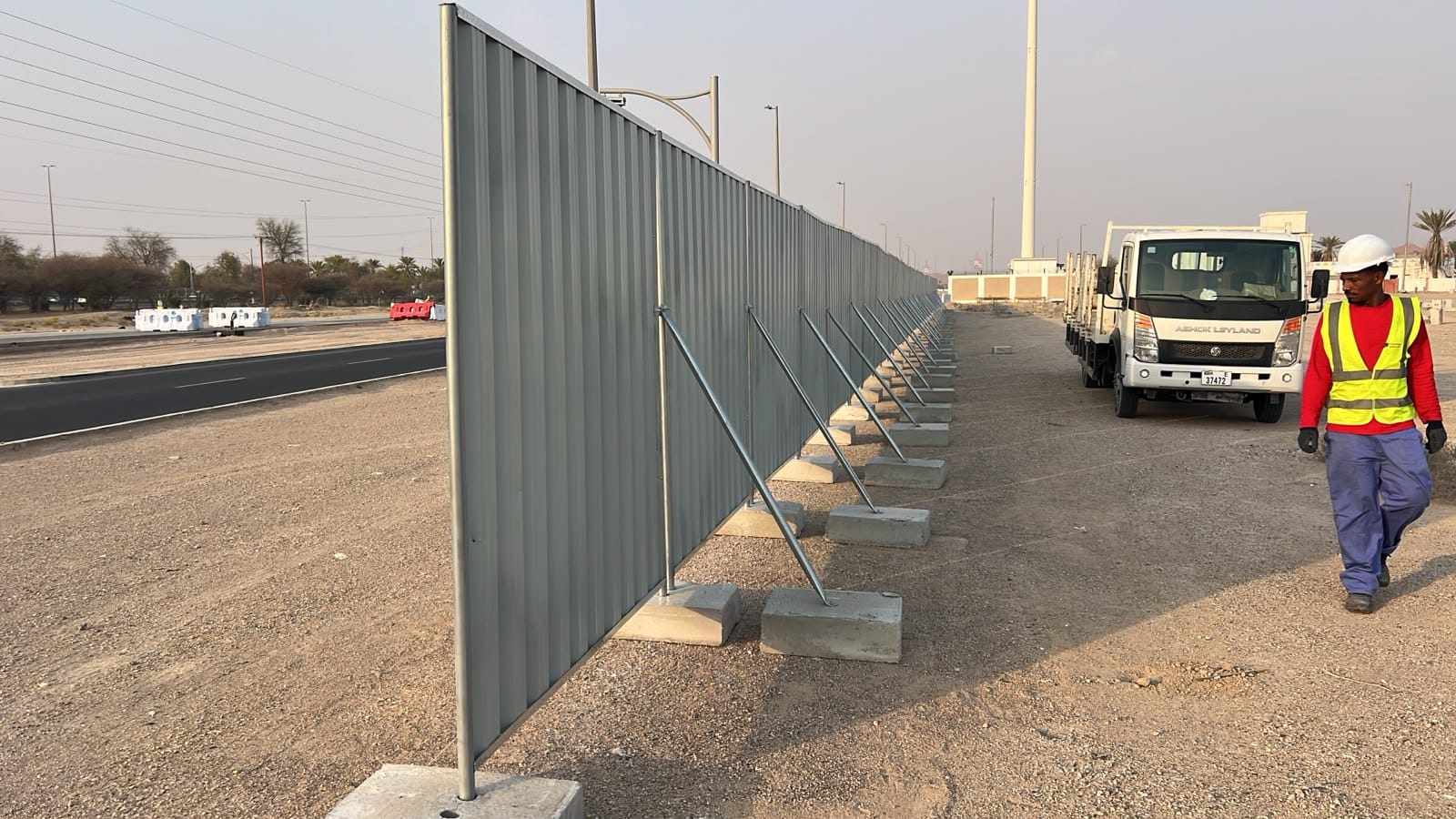
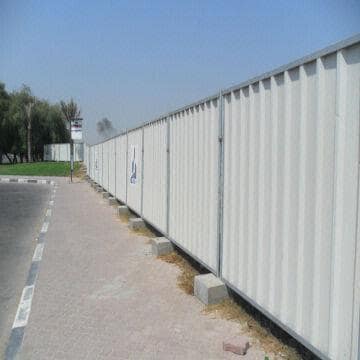
Abu Dhabi’s rules on construction Fencing are more specific than most contractors expect. According to municipal guidance reported by Gulf News, the fencing must follow dimensions approved by the municipality and be built from iron sheets fixed to a steel frame mounted on stable concrete bases. Color isn’t left to choice either — the structure should be light orange or another municipality-approved color, and it needs regular upkeep.
The physical specifications go further:
- The gap between panels should not exceed 5cm
- The clearance between the ground and the fence structure should be no more than 20cm
- The minimum fence height is 2.5 meters
- Entrance gaps must be narrower than 5 meters
There’s also a responsiveness requirement that catches some contractors off guard: if the municipality asks a contractor to relocate or adjust their fencing, they typically have 24 hours to comply. That’s a tight window if your fencing supplier doesn’t have stock or labor on standby, so it’s worth choosing a vendor who can move fast, not just one who can install once.
Beyond the fence itself, Abu Dhabi contractors need to be careful about what happens around it — materials and equipment can’t spill outside the fenced boundary or be placed over utility lines, and the fence line itself is treated as the project’s legal edge for inspection purposes.
Ajman’s Approach: Aligned with the National Framework
Ajman doesn’t run an entirely separate rulebook from the rest of the UAE. construction Fencing safety nationally is governed through unified building codes that local municipalities use to manage construction Fencing safety and fire protection, creating a shared set of standards that applies across all the emirates rather than wildly different rules from one city to the next. Ajman Municipality and Planning Department also handles its own environmental and safety compliance certification for projects within its jurisdiction.
In practice, this means contractors working in Ajman should expect requirements broadly consistent with Abu Dhabi’s — height minimums, sturdy framing, controlled access points, and a tidy, well-maintained appearance — while still confirming the specific permit and inspection process through Ajman Municipality directly, since approval steps and documentation can differ by emirate even when the underlying safety code is shared.
Boundary and perimeter approvals are also part of the bigger permitting picture. Permits for boundary walls and site enclosures are generally required as part of ensuring the fence or wall complies with safety and zoning rules before construction activity gets fully underway — something worth sorting out early rather than scrambling for after work has already started.
Temporary vs. Permanent Fencing: How to Choose
Most active construction Fencing sites in Abu Dhabi and Ajman use temporary fencing, and for good reason — it’s fast to put up, fast to take down, and doesn’t require the kind of foundation work that a permanent wall does. But “temporary” doesn’t mean flimsy. It still has to meet the same structural and safety bar as anything else on a regulated site.
Temporary construction Fencing generally makes sense when:
- The project has a defined end date and the perimeter needs to disappear once work wraps up
- The site borders public roads, walkways, or residential areas where quick reconfiguration might be needed
- Budget and mobility matter more than long-term durability
Permanent construction Fencing tends to fit better when:
- The boundary will remain in place after construction (e.g., a facility’s long-term perimeter)
- The site is in a high-security or high-value zone needing a more robust, lasting barrier
- The project timeline stretches over several years, making a sturdier one-time investment more cost-effective than repeated temporary installs
A lot of contractors actually run both in sequence: temporary fencing during the active build, transitioning into a permanent wall or fence once the structure is complete and the site moves into its final phase.
Common Fencing Materials Used Across UAE Sites
Several construction Fencing styles dominate the market, and the right one depends on visibility needs, budget, and how much dust or noise containment the surrounding area requires.
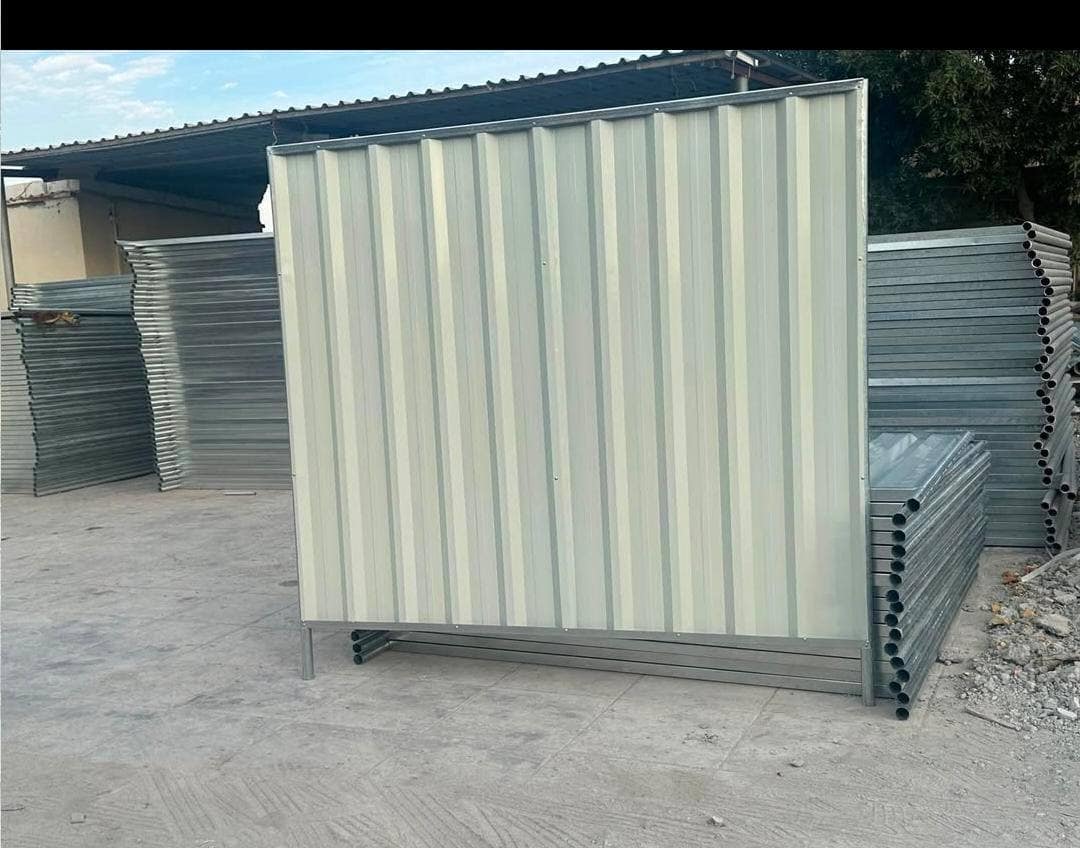
Corrugated steel sheet hoarding is the most common solid option on UAE sites. It’s built from galvanized iron sheets mounted on a steel frame, and it fully blocks the view into the site — useful in busy urban stretches where dust, noise, and visual clutter need to be minimized. This is also generally the style that matches the iron-sheet, steel-frame specification Abu Dhabi Municipality describes for approved temporary fencing.
Chain link fencing uses a woven steel wire mesh instead of solid panels. It’s more affordable, lighter to transport, and still durable, but it leaves the site visible — which works fine for less sensitive sites but isn’t ideal where dust control or privacy from the public is a priority.
Welded mesh fencing sits somewhere in between — panels welded together for a sturdier mesh structure that holds up well against wind and weather while still being lighter than full hoarding.
Whichever material you go with, the framing details matter as much as the panel itself: properly spaced support pipes, galvanized U-channels at the top and bottom of each panel, and stable precast concrete base blocks are what keep a fence from buckling in UAE wind conditions or shifting over a multi-month project.
Practical Tips Before You Order construction Fencing
A few things worth sorting out before panels show up on site:
Confirm the permit first. Both Abu Dhabi and Ajman expect construction Fencing to be licensed before installation, not after. Chasing the paperwork retroactively is a common (and avoidable) source of delay.
Match the color and finish to what’s approved. Abu Dhabi’s preference for light orange isn’t just a suggestion — it’s the kind of detail inspectors check for specifically, so don’t assume any neutral color will pass.
Plan for the 24-hour relocation rule. If your supplier can’t move quickly when the municipality requests a change, that delay becomes your liability, not theirs.
Don’t treat the fence as a one-time install. Periodic maintenance is part of the requirement, not an optional extra — panels that rust, lean, or develop gaps beyond the allowed limits can trigger the same violations as having no fence at all.
Think about the full project lifecycle. If your site will eventually need a permanent boundary, it’s worth discussing that with your fencing supplier upfront rather than treating temporary and permanent fencing as two unrelated purchases.
Final Thoughts
construction Fencing rarely gets the attention that structural work or MEP planning does, but it’s one of the few site elements that’s checked from day one and stays checked until the project closes out. In Abu Dhabi and Ajman specifically, the rules are detailed enough — height, panel gaps, color, response time — that it pays to work with a supplier who already understands the local requirements rather than figuring it out mid-project.
Whether you need a fast temporary setup for a short-term build or a more permanent perimeter solution, getting the specifications right from the start saves you the cost, delay, and hassle of redoing it later.