
H Beam and I Beam: What’s the Difference and Which One Should You Use?
H Beam and I Beam: What’s the Difference and Which One Should You Use?

H Beam and I Beam Walk onto any construction site and you’ll see steel sections everywhere. Two of the most common are the H beam and the I beam. They look similar at a glance, and plenty of people use the names interchangeably. But they behave differently under load, and choosing the wrong one can cost you money, time, or structural performance.
Here’s a plain-language guide to help you tell them apart and decide which suits your job.
What Is an H Beam?
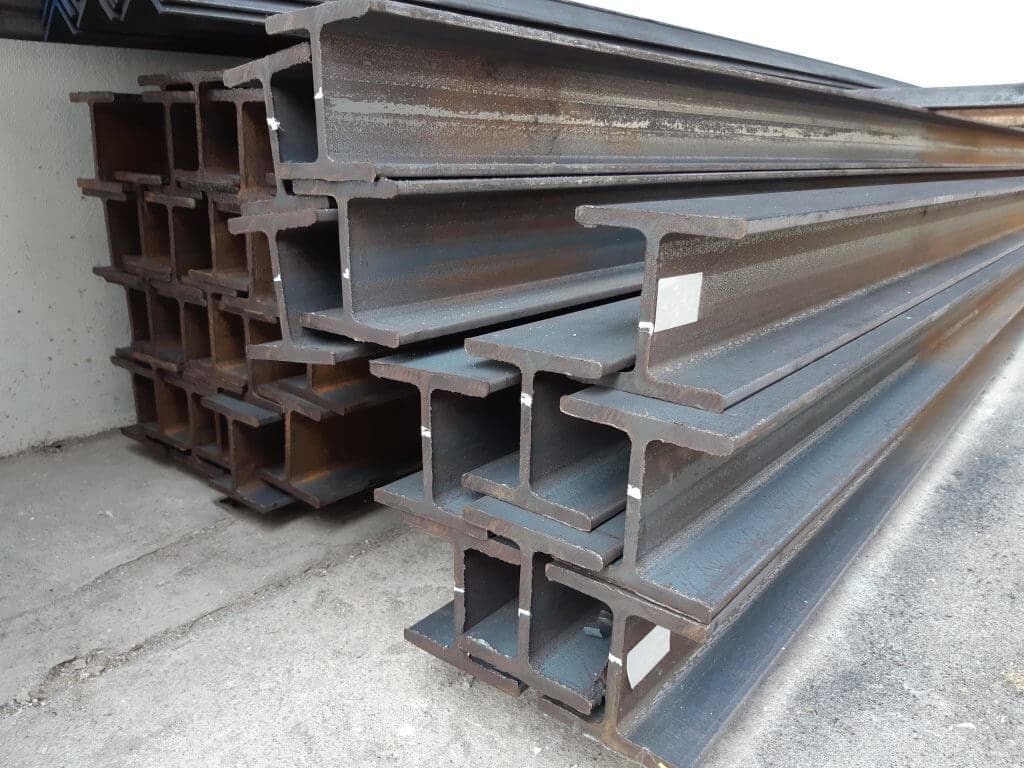
An H beam gets its name from its shape. Look at the cross-section and you’ll see the letter “H”: two wide flanges running parallel, joined by a web in the middle. The flanges are wide, flat, and the same thickness from edge to edge.
That wide, even design gives the beam serious stability. It carries heavy loads well, not only when it’s laid flat as a beam, but also when it’s stood upright as a column.
What Is an I Beam?
An I beam has the same basic idea: two flanges and a web. The difference is in the proportions. The flanges are narrower, and on many standard I beams the inner surface of the flange tapers slightly. The web is also usually thinner.
This makes the I beam lighter and very efficient when the load acts in one direction, such as a floor beam supporting weight from above.
The Key H Beam and I Beam Differences
Flange width. H beams have broad flanges. I beams have narrower ones. This is the quickest way to tell them apart on site.
Weight. Because H beams carry more steel in the flanges and web, they are heavier per meter. I beams are lighter and easier to handle.
Load direction. I beams do their best work resisting bending in one plane. H beams cope well with loads from several directions, including compression.
Stiffness. The wider flange of an H beam resists sideways buckling better, which matters on long spans and in tall columns.
Cost. I beams often cost less per piece. But if an H beam lets you use fewer members or simplify the design, the total project cost can come out similar or even lower.
Where H Beams Work Best
H Beam and I Beam are the go-to choice when strength and versatility matter most. You’ll find them in:
- Columns and primary frames of warehouses and factories
- Bridges and heavy industrial structures
- Piling and foundation support
- Crane runway beams
- Mezzanine floor structures that carry heavy storage or equipment
- Large-span roof systems
Their ability to act as both beam and column makes them especially handy. One section type can do several jobs, which keeps ordering and fabrication simpler.
Where H Beam and I Beam Work Best
I beams shine where loads are predictable and mostly vertical. Typical uses include:
- Floor joists and secondary beams in buildings
- Light to medium-span roof framing
- Support beams over openings
- Platforms and walkways
- Equipment supports and lifting beams
When weight matters, say you want to reduce the load on the foundation or make installation easier, an I beam is often the smarter pick.
How to Choose the Right H Beam and I Beam
There’s no single winner. The right answer depends on your project. Ask yourself these questions : H Beam and I Beam
- What loads will the beam carry? Heavy, multi-directional, or compressive loads point toward an H beam. Straightforward vertical loads suit an I beam.
- How long is the span? Longer spans need more stiffness and depth.
- Will it be used as a column? If yes, an H beam is usually the better fit.
- What are the weight limits? Consider the foundation and how the steel will be lifted into place.
- What is your budget? Compare the total installed cost, not just the price per ton.
- What conditions will it face? Humid or coastal environments call for galvanizing or protective coatings.
Whatever you choose, have a qualified structural engineer confirm the final section size, steel grade, and connection details. Codes and safety margins are not something to guess at.
A Few Practical Tips H Beam and I Beam
H Beam and I Beam
- Check the steel grade and the standard it follows (such as EN, ASTM, or JIS) before ordering.
- Ask for mill test certificates so you know the material meets its stated specification.
- Plan connection details early. Bolted and welded joints both work well on either type, but the design should be settled before fabrication begins.
- Protect the steel properly. Good coatings add decades to its life.
Final Thoughts
H beams and I beams are close relatives, but they are built for slightly different jobs. H beams offer strength, stability, and flexibility for heavy and demanding structures. I beams offer an efficient, lighter option for straightforward bending loads. Understanding that difference helps you design smarter, spend wisely, and build with confidence.
Need help selecting structural steel for your next project? Get in touch with MABMTR.COM to discuss your requirements and get guidance from a team that understands real-world construction needs.
