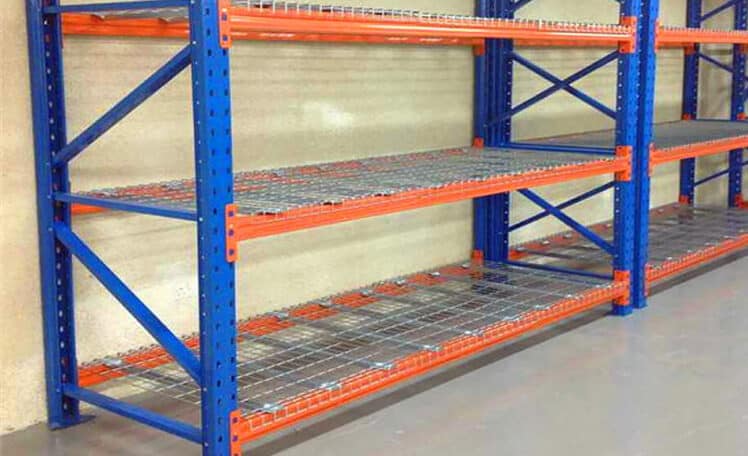
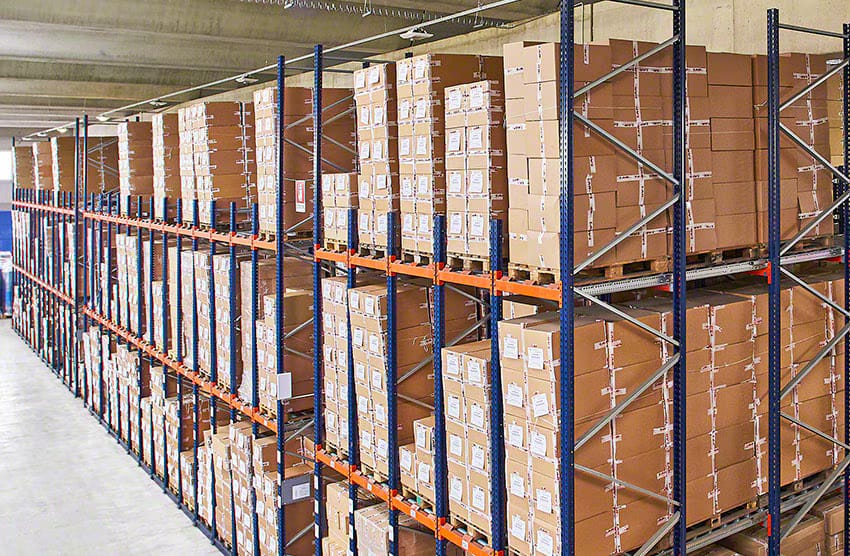
heavy-duty shelving in Dubai: Safe Load Capacity Calculation for Warehouses

heavy-duty shelving in dubai warehousing sector has grown at a remarkable pace over the last decade, driven by the emirate’s role as a logistics hub connecting Asia, Africa, and Europe. From Jebel Ali Free Zone to Dubai Industrial City, thousands of square meters of storage space are filled every year with heavy-duty shelving systems designed to hold everything from auto parts to construction materials. But behind every well-organized warehouse lies a critical, often overlooked calculation: how much weight can that shelving actually carry, safely, day after day?
Getting this number wrong isn’t a minor mistake. Overloaded racking is one of the leading causes of warehouse accidents worldwide, and in a climate like Dubai’s — where heat, humidity, and constant operational tempo add extra stress to structures — the margin for error shrinks even further.
Why heavy-duty shelving in Dubai Single Number
Many warehouse managers assume that a shelving unit has one fixed weight limit, printed on a spec sheet, that applies everywhere. In reality, safe load capacity depends on several interacting factors, and it changes depending on how and where the shelving is configured.
Beam capacity refers to how much weight a single horizontal beam can hold across its span before it deflects or fails. This is influenced by the beam’s length, its steel gauge, and the profile design (box beams generally outperform step beams of the same weight).
Frame capacity is a separate calculation altogether. The vertical uprights bear the cumulative load of every level stacked above, plus the compressive forces transferred through the frame to the floor. A frame rated for a certain total load can still fail if that load is distributed unevenly or if beam levels are spaced incorrectly.
Floor loading matters just as much as the rack itself. Dubai warehouses built on reclaimed land or newer industrial plots may have different slab thickness and reinforcement than older facilities, which affects how much point-load a rack’s footplate can transfer without cracking or settling the floor.
The Basic Calculation Warehouses Should Understand
While a full engineering assessment should always involve a qualified racking supplier or structural engineer, warehouse operators benefit from understanding the underlying logic:
- Unit Distributed Load (UDL) per beam level is calculated by the manufacturer through load testing, factoring in a safety margin (commonly a factor of 1.5 to 2 depending on the standard applied, such as FEM 10.2.02 or RMI/ANSI MH16.1).
- Total bay load sums the UDL across all beam levels within a single bay, which must not exceed the rated capacity of the upright frame.
- Point loads — such as a single heavy pallet or machinery part rather than evenly spread goods — require separate calculation, since concentrated weight stresses the beam differently than distributed weight.
- Seismic and wind factors, while less relevant in Dubai than in some regions, are still factored into UAE-compliant racking designs, alongside dynamic forces from forklift traffic.
A responsible supplier will provide a load capacity plate or signage for each bay, clearly stating the safe working load per level and per bay — and this signage should never be treated as optional or purely decorative.
Local Factors That Affect Shelving Performance in Dubai
Several conditions specific to the UAE market influence how heavy-duty shelving should be specified:
- High-density storage demand: With real estate costs in prime logistics zones like Jebel Ali and Al Quoz, many businesses push for taller racking (sometimes 10–12 meters) to maximize cubic storage. Taller racks introduce more complex load and stability calculations, particularly around seismic bracing and anti-collapse mesh.
- Heat-related material stress: Extreme summer temperatures can affect steel properties marginally over long periods, and thermal expansion should be factored into very large continuous rack runs.
- Forklift and MHE traffic: Higher throughput warehouses common in e-commerce and 3PL operations mean more frequent impacts near rack uprights, making protective bollards and impact-rated frames a practical necessity rather than an upgrade.
- Regulatory compliance: Facilities operating under Dubai Municipality, DEWA, or free zone authorities (JAFZA, DIC, DAFZA) increasingly require documented racking inspections and load certification as part of occupational safety audits.
Practical Steps Before Installing or heavy-duty shelving in Dubai
Before committing to a heavy-duty shelving system, warehouse operators in Dubai should:
- Request full load capacity documentation (per shelf, per bay, and per frame) in writing from the supplier
- Conduct a floor load assessment, especially in older or converted facilities
- Clearly label every bay with its safe working load
- Schedule periodic rack inspections, since damage from forklifts or corrosion can silently reduce capacity over time
- Avoid mixing pallet types or load configurations without recalculating capacity
Final Thoughts
Heavy-duty shelving is only as strong as the calculation behind it. In a fast-moving logistics market like Dubai’s, it’s tempting to prioritize speed of installation and maximum storage density — but safe load capacity should never be an afterthought. Partnering with a racking supplier who provides transparent engineering data, and building a habit of routine inspection, protects both inventory and personnel, and keeps operations running without costly downtime or accidents.